By Electine Oyaga
The first time Ephrance Namugenyi walked into a lecture hall filled with engineering students, she counted. Forty-two men. Three women including herself. The numbers never quite evened out during her years at university. She would sit through classes, take notes, and absorb everything the professors taught while at the same time subconsciously aware that she occupied a space where few women were expected to belong.
"I felt lonely sometimes," she recalls now, years later. "Because you were constantly aware that you are different."
That awareness never fully disappeared. It followed her into the profession when she became a lecturer at Kyambogo University's Department of Electrical and Electronics Engineering. Then later into her business, onto the construction sites where clients looked past her to find the man in charge. And to her dismay, she watched contracts get abruptly cancelled precisely because she, a woman, was leading the projects.
But somewhere along the way, Ephrance stopped waiting for permission to belong. Instead, she built something that would create space for others like her.
The Gap Between Education and the Job Market
As a lecturer, Ephrance found purpose in shaping young engineers. She watched them arrive as first-year students, hungry to learn. She taught them complex theories, practical applications, and the rigorous professional discipline required to earn an engineering degree.
Then came graduation. Then the job search. Then silence.
"You teach a student, you train them, and then they cannot find work," she says, the weight of those words still heavy in her voice. "It is painful."
The construction industry like any other employment sector continues to remain limited for fresh graduates. Organizations wanted experienced professionals. Clients wanted trusted names. Young people, despite their qualifications, find themselves locked out.
Ephrance saw the problem from both sides. She knew the graduates, hundreds of them, trained and market ready. Then she also knew the families struggling to build homes, desperate for trustworthy guidance but unsure where to find it.
The gap between supply and demand was enormous. Rather than let the experience defeat her, it hardened her resolve. If the industry would not welcome women, she would help bridge the gap from within.
The Pandemic Pivot
When COVID-19 shut down universities in 2020, Ephrance, like countless other educators, suddenly found herself idle. Teaching stopped. Income slowed. Uncertainty loomed.
"We had to look for other ways to make money," she recalls.
But necessity, as it often does, became the mother of invention. With time on her hands and a network of unemployed engineering graduates stuck at home, Ephrance began connecting dots that had always been there but never fully connected.
What if there was a platform that linked trained professionals directly to clients who needed them? What if young engineers could find work not by competing with established firms, but by serving families building modest homes? What if the very people struggling to enter the industry became the solution to its labor shortages?
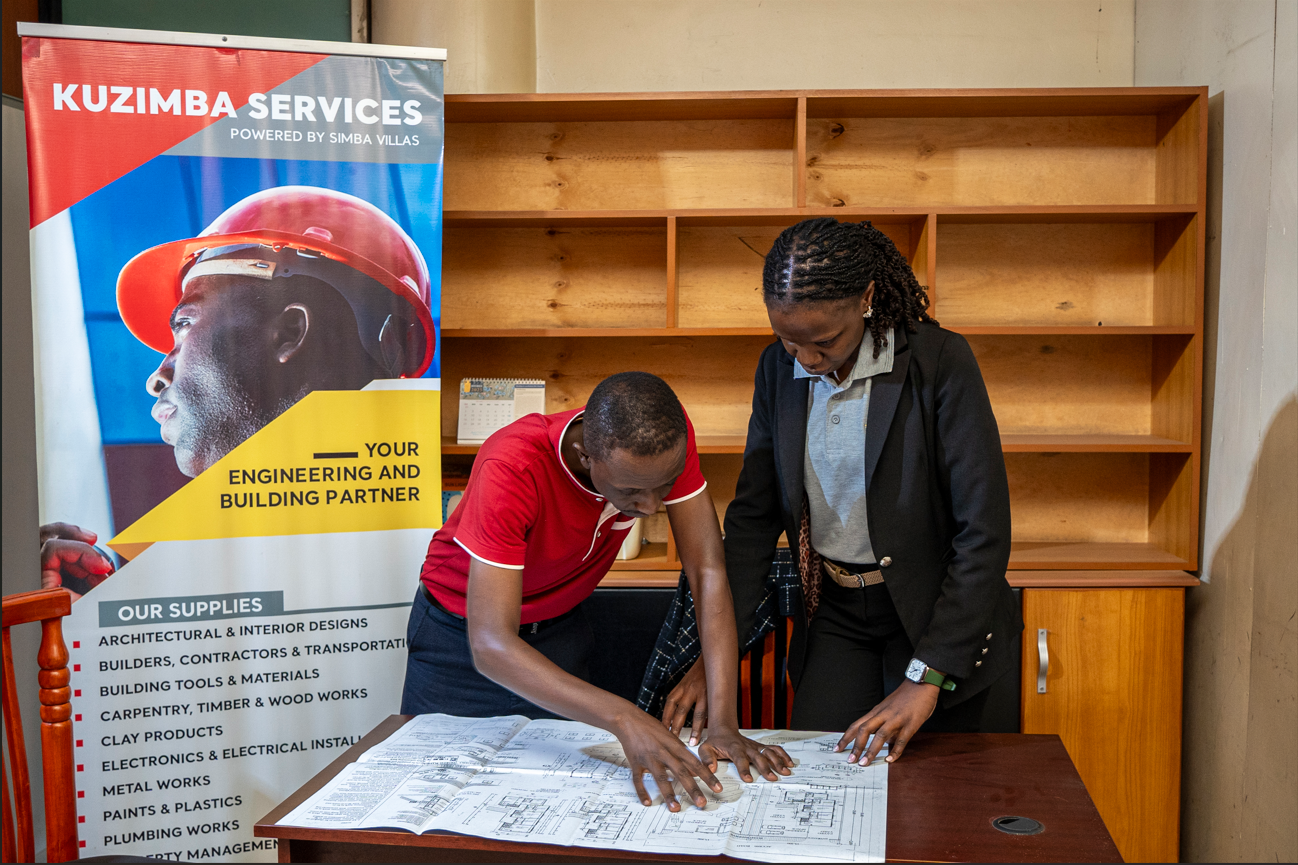
Those questions gave birth to Kuzimba Services Ltd, a construction management platform designed to guide clients through every stage of building, from land acquisition to final property/infrastructure handover. The name "Kuzimba," drawn from the Luganda word for "building," reflected a simple mission: make construction accessible, transparent, and inclusive.
Unlike traditional construction companies, Kuzimba functions as an ecosystem, matching trained professionals with clients, coordinating projects, and ensuring quality control of building materials and the construction process. For clients, the platform solves a persistent problem: where to find trustworthy contractors and reliable construction materials and information. For young engineers, electricians, plumbers, and technicians, it offers something even more valuable, create a pathway into an industry that has long kept them waiting at the gate.
As Ephrance explained: "The model works like this: a client approaches Kuzimba with a project, perhaps building a family home, a small commercial building, or renovations. The team assesses the scope, develops plans, and identifies the professionals needed. Then we tap into our network of trained graduates, matching skills to requirements."
The result is a true win-win. Clients receive professional, managed service and a quality build, often at a more accessible price point. Graduates gain the on-site experience and professional portfolio they desperately need to kick start their careers. The gatekeeping of the industry is bypassed, replaced by a merit-based pathway where competence matters more than social networks.
Joining the Standard Chartered Women in Tech Program
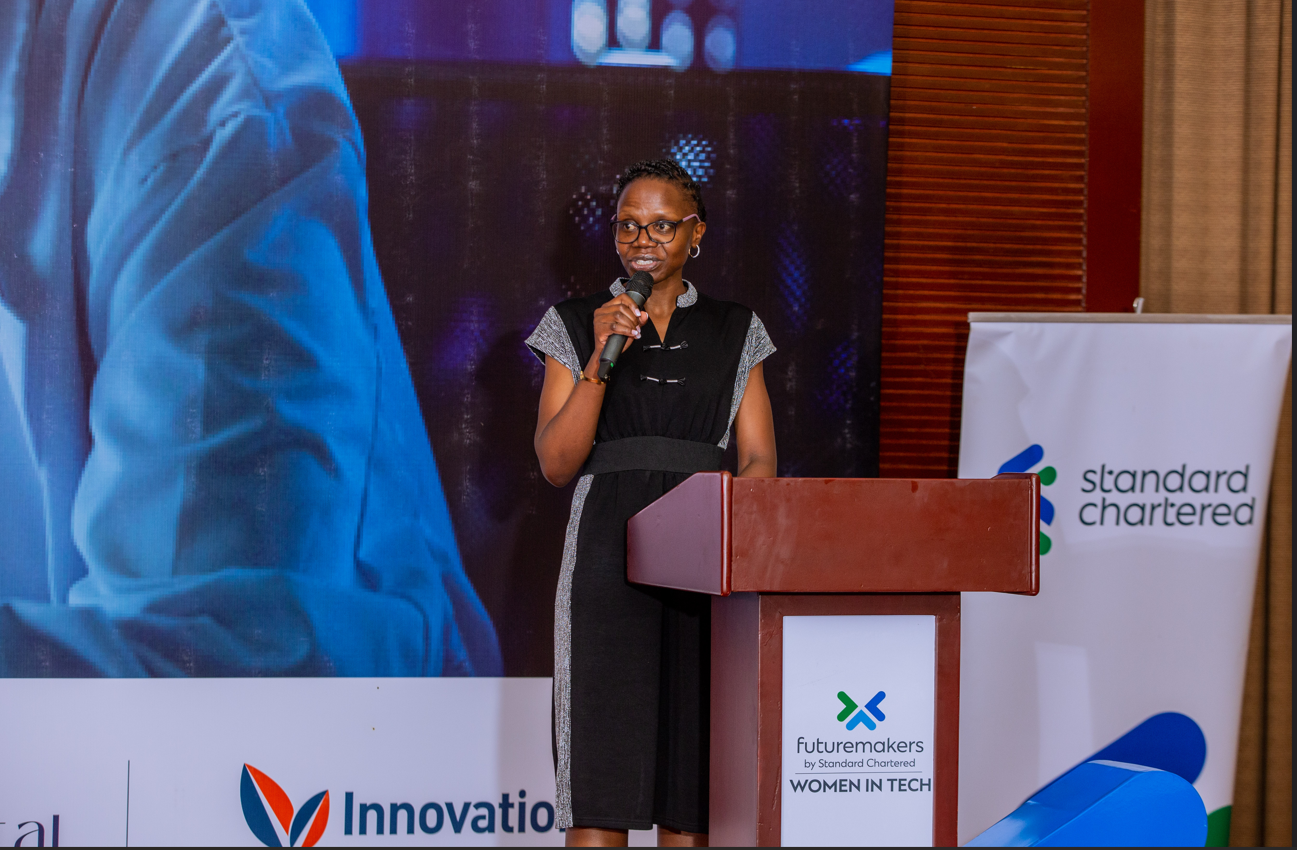
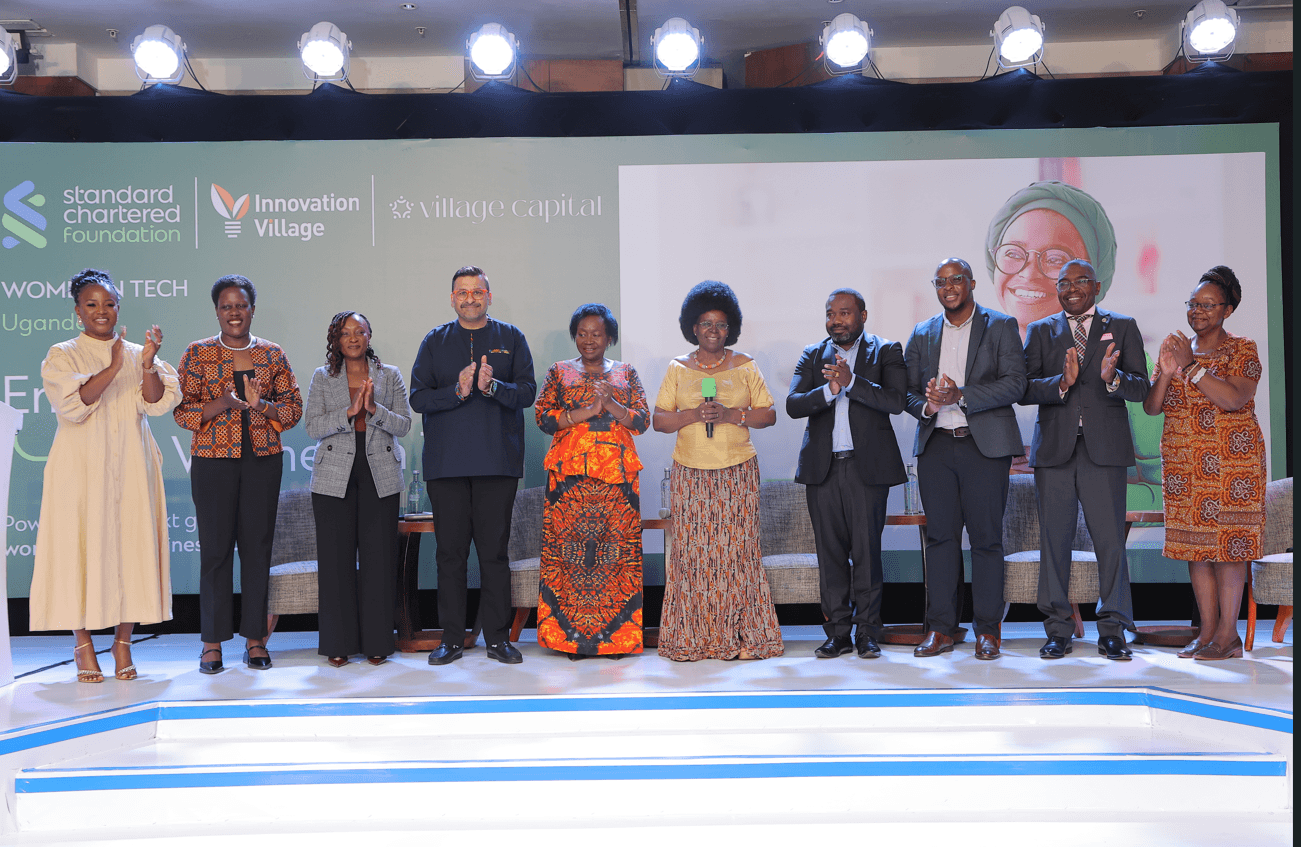
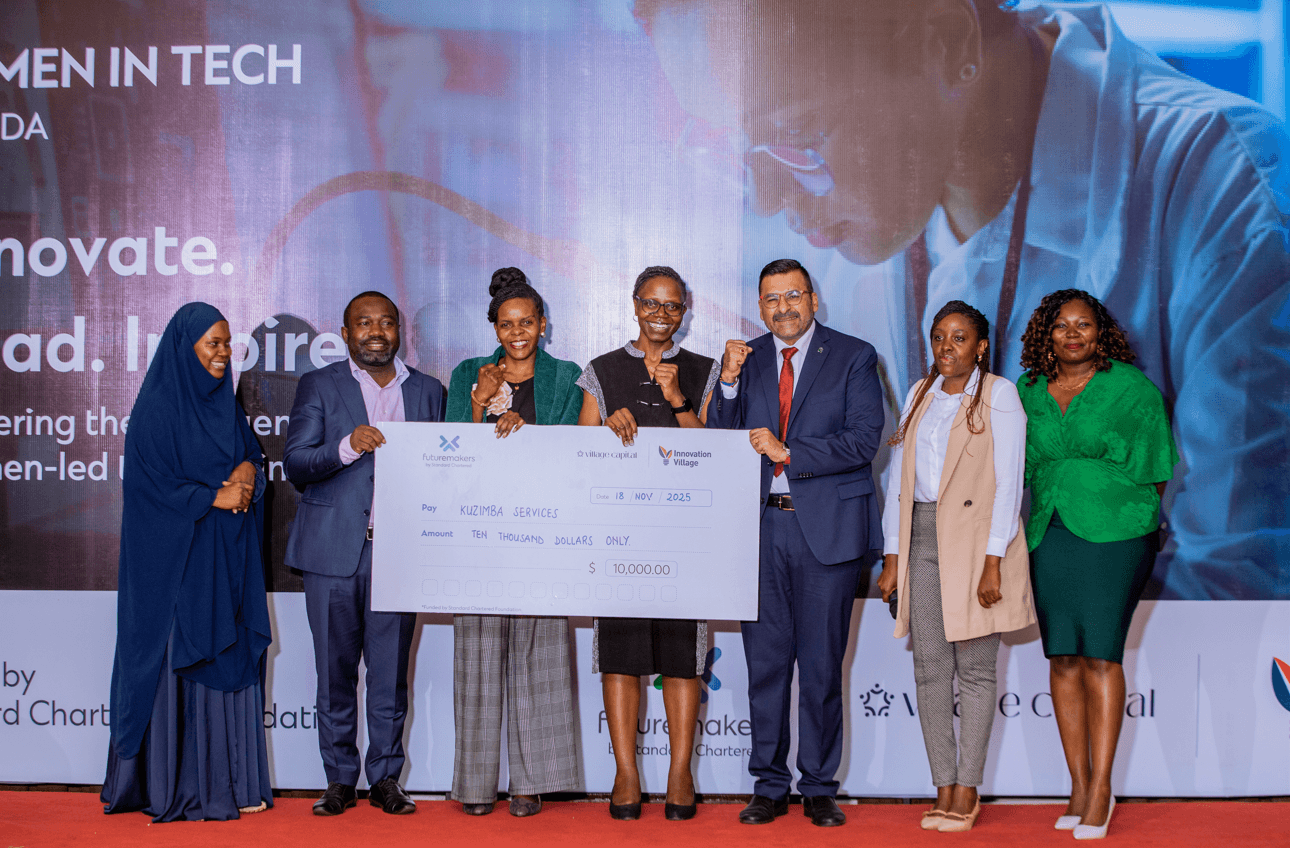
Through her network, Ephrance learned of the Women in Tech program by Standard Chartered Foundation. When she paid closer attention to the requirements and benefits of the program specifically its focus on building and accelerating women-led business enterprises in the technology sector, she keenly applied through the Innovation Village registration portal and patiently waited for feedback.
When the good news arrived and Ephrance joined the Standard Chartered Women in Tech Uganda Program, she found herself in unfamiliar territory: not as a lecturer or engineer, but as a student once again.
"The program was like a huge buffet," she says, smiling at the memory. "There was so much to learn."
The training covered everything in business development, things she hadn't learned in engineering school: financial management, marketing, business strategy, digital tools. She learned to use QuickBooks for accounting, discovered how digital marketing especially social media could attract clients, and began building partnerships with suppliers and financial institutions.
More importantly, she found herself surrounded by other brilliant women entrepreneurs, each navigating their own challenges, each building something meaningful, each proving that business leadership was not reserved for men.
The transformation was gradual but unmistakable. Kuzimba became more organized, more efficient, and more visible to clients. Business revenue grew significantly in five months making a 0.05% profit increment, she shares quietly, as if still surprised by her own success.
But the program did more than improve her bottom line. It expanded her vision. Where she had once thought locally serving a small network of clients in Kampala and she began thinking regionally, imagining Kuzimba operating across East Africa.
Building a Pipeline of Opportunity
Today, Ephrance's vision extends far beyond individual projects. She dreams of establishing an engineering skills training school for women in construction, a place where they can learn bricklaying, painting, electrical installation, and site management. Not as assistants, but as future site supervisors, project managers, and company owners.
She wants to see more women managing building sites, more women signing contracts, and more women engineers breaking the industry stereotype.
"There is no reason construction should belong to men," she says firmly. "Women can do this work. We just need the opportunity."
She also plans to expand Kuzimba into real estate development, building complete, quality homes that families can purchase with confidence. Too many Ugandans, she notes, pour their savings into construction projects that stall or disappoint. She wants to offer something better: houses that are finished, well-built, and fairly priced.
Further down the road, she hopes to invest in facilities that produce building materials such as blocks, steel components, and other supplies strengthening local supply chains and creating even more jobs.
Advice to Women
Her message to other women pursuing careers in engineering or entrepreneurship is simple: "Do not fear," she says. "It is possible. Seek mentorship, build your skills, and remain resilient even when doors close. The journey may be difficult, but every setback teaches you something valuable."
She encourages young people to look beyond formal employment and consider creating their own opportunities by leveraging women-led initiatives like the Standard Chartered Women in Tech Program.
"We have the skills. We have the knowledge. What we need is the courage to start and the determination to keep going, even when people doubt us."
The Foundation Being Laid
Those who work alongside Ephrance describe her as a leader who blends technical expertise with unwavering determination. According to Alvin Araka, Sales Manager at Kuzimba Services, she is deeply resilient and leads by example. Through her leadership, the team has embraced the importance of accountability, the value of persistence, and the power of showing up, even in spaces where the industry may suggest they do not belong.
For the young engineers who find opportunities through Kuzimba, Ephrance offers something even more powerful: proof that their training matters, that their skills are valued, and that there is indeed a place for them in the industry they worked so hard to enter.
In a country where construction is key but remains largely closed to those who build it, Ephrance Namugenyi is doing more than managing projects. She is quietly, steadily, rebuilding an industry from the ground up; one woman, one graduate, one home at a time.